
Beamliving
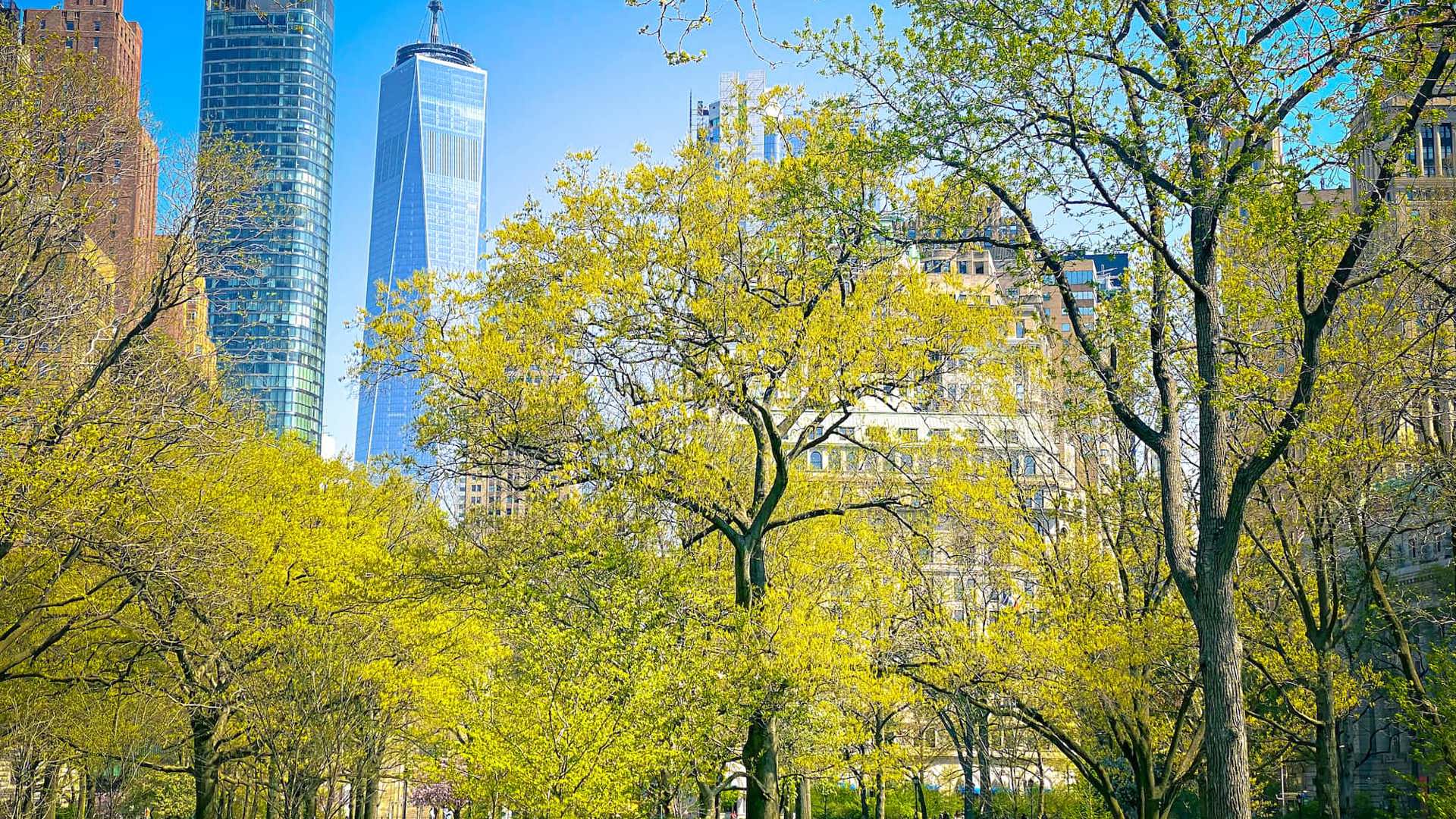
I. The West Plaza currently has 3 native plants available for the public to view.
-
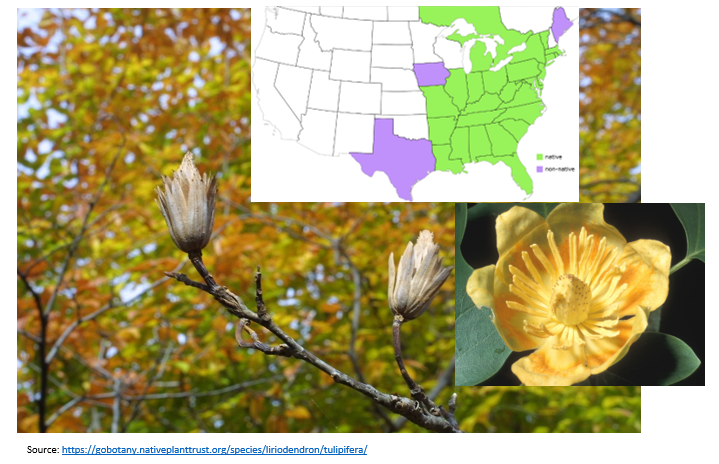
- Liriodendron tulipifera
- Tuliptree is easy to remember for its leaves, which are shaped roughly like tulip flowers with rounded bases and square-lobed tops. It is the largest member of the magnolia family in New England and one of the tallest hardwoods in eastern North America, with a tall, straight trunk reaching up to 200 feet (65m) in height. It produces showy, white flowers in spring. The lustrous, yellow wood gives this species its alternative common name, yellow poplar. The wood is very light and soft, and suitable for many uses including veneer, pulpwood, crates for holding water and food, and floating rafts. Its majestic, straight trunk and showy flowers also make it a popular ornamental tree.
- Habitat region commonly known in the New England states.
- Liriodendron tulipifera
-
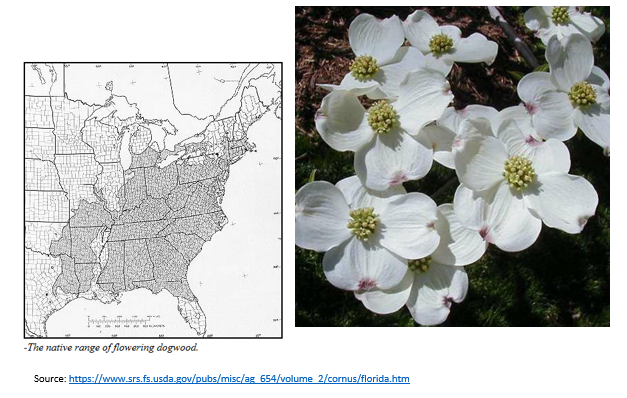
- Cornus florida
- Commonly known as flowering dogwood, it is a small deciduous tree that typically grows 15-30’ tall with a low-branching, broadly-pyramidal but somewhat flat-topped habit. It arguably may be the most beautiful of the native American flowering trees. It blooms in early spring (April) shortly after, but usually overlapping, the bloom period of the redbuds. The true dogwood flowers are actually tiny, yellowish green and insignificant, being compacted into button-like clusters. However, each flower cluster is surrounded by four showy, white, petal-like bracts which open flat, giving the appearance of a single, large, 3-4” diameter, 4-petaled, white flower. Oval, dark green leaves (3-6” long) turn attractive shades of red in fall. Bright red fruits are bitter and inedible to humans (some authors say poisonous) but are loved by birds. Fruits mature in late summer to early fall and may persist until late in the year.
- Habitat range of flowering dogwood extends from extreme southwestern Maine west to New York, extreme southern Ontario, central Michigan, central Illinois, and central Missouri; south to extreme southeast Kansas, eastern Oklahoma, east Texas; and east to north Florida. A variety also grows in the mountains of Nuevo León and Veracruz, Mexico.
- Cornus florida
-
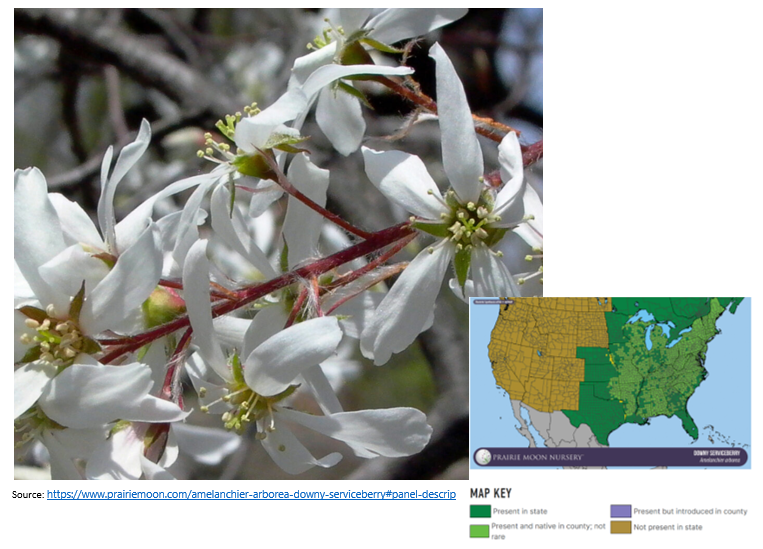
- Amelanchier arborea
- Known as Downy Serviceberry, it is a native among the first trees to bloom in the spring, bursting with beautiful white flowers that festoon the entire canopy. The lovely veil of blooms gives way to small pome fruits that blush red and then darken to a ripe purple-black in late summer. It thrives in various soil types and is adaptable to both sunny and partially shaded locations. In early spring, it produces clusters of delicate white flowers that attract pollinators like bees and butterflies. These flowers give way to small, edible berries that are enjoyed by wildlife and humans alike. Its seasonal interest, wildlife value, and adaptability make it a valuable addition to gardens seeking native species.
- Habitat is commonly in woodlands throughout the Mid-Atlantic Region.
- Amelanchier arborea
I. II. You may see wildlife species in the plaza; such as birds.
-
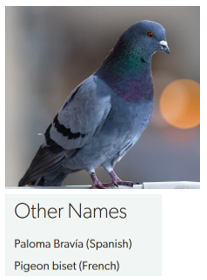
- Rock Pigeon – can’t miss seeing one walk or fly by you!
- Pigeons can find their way home, even if released from a distant location blindfolded. They can navigate by sensing the earth’s magnetic fields, and perhaps also by using sound and smell. They can also use cues based on the position of the sun.
- Mesopotamian cuneiform tablets and Egyptian hieroglyphics suggest that pigeons were domesticated more than 5,000 years ago. The birds have such a long history with humans that it's impossible to tell where the species' original range was.
- Rock Pigeons carried messages for the U.S. Army Signal Corps during World War I and II, saving lives and providing vital strategic information.
- Rock Pigeon – can’t miss seeing one walk or fly by you!
-
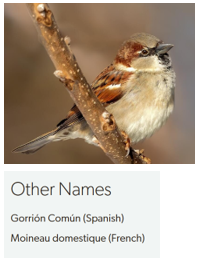
- House Sparrow - you can find them all around New York City.
- The House Sparrow was introduced into Brooklyn, New York, in 1851. By 1900 it had spread to the Rocky Mountains. Two more introductions in the early 1870s, in San Francisco and Salt Lake City, aided the bird’s spread throughout the West. House Sparrows are now common across all of North America except Alaska and far northern Canada.
- The House Sparrow prefers to nest in manmade structures such as eaves or walls of buildings, street lights, and nest boxes instead of in natural nest sites such as holes in trees.
- Due to its abundance, ease to raise and general lack of fear towards humans, the House Sparrow has proved to be an excellent model organism for many avian biological studies. To date, there have been almost 5,000 scientific papers published with the House Sparrow as the study species.
- House Sparrow - you can find them all around New York City.
-
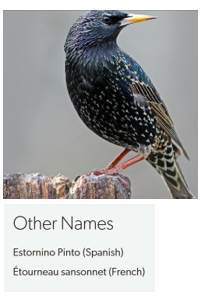
- European Starling – First brought to North America in the nineteenth century.
- Starlings are great vocal mimics: individuals can learn the calls of up to 20 different species. Birds whose songs starlings often copy include the Eastern Wood-Pewee, Killdeer, meadowlarks, Northern Bobwhite, Wood Thrush, Red-tailed Hawk, American Robin, Northern Flicker, and many others.
- Starlings turn from spotted and white to glossy and dark each year without shedding their feathers. The new feathers they grow in fall have bold white tips – that’s what gives them their spots. By spring, these tips have worn away, and the rest of the feather is dark and iridescent brown. It’s an unusual changing act that scientists term “wear molt.”
- Starlings are strong fliers that can get up to speeds of 48 mph.
- European Starling – First brought to North America in the nineteenth century.
-
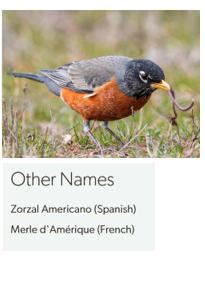
- American Robin - popular for their warm orange breast, cheery song, and early appearance at the end of winter.
- An American Robin can produce three successful broods in one year. On average, though, only 40 percent of nests successfully produce young. Only 25 percent of those fledged young survive to November. From that point on, about half of the robins alive in any year will make it to the next. Despite the fact that a lucky robin can live to be 14 years old, the entire population turns over on average every six years.
- Robins eat a lot of fruit in fall and winter. When they eat honeysuckle berries exclusively, they sometimes become intoxicated.
- The oldest recorded American Robin was 13 years and 11 months old.
- American Robin - popular for their warm orange breast, cheery song, and early appearance at the end of winter.
III. The health benefits of biodiversity conservation.
Biodiversity is a huge variety of living things on Earth. It includes every plant, animal, fungus, and tiny microbe, plus the natural communities and ecosystems they form. The following explains interesting health benefits of biodiversity conservation.
- Disease Control and Prevention
- Intensity Effect
- Intact ecosystems with high species variety keep animal host populations balanced, which stops single disease-carrying species from taking over.
- Lower Exposure
- Protecting natural habitats prevents the deforestation and habitat loss that force wild animals into closer contact with humans, reducing spillover risks for zoonotic illnesses.
- Intensity Effect
- Mental and Physical Well-Being
- Stress Reduction
- According to U.S. Environmental Protection that spending time in species-rich green and blue spaces reduces human blood pressure, anxiety levels, and stress hormones.
- Active Living
- Natural outdoor environments encourage physical movement, which combats cardiovascular issues and improves overall cognitive health.
- Stress Reduction
- The Importance of Biodiversity
- The Department of Environmental Conservation of New York explains that as many plants and animals as possible are important for the benefit of humans and of other species. Each species is a unique part of our natural world and cannot be replaced if lost. Individual species help meet our basic needs; as it states:
- Animals and plants provide food and materials for clothing, shelter, and fuel.
- Insects pollinate crops and control agricultural pests.
- Plants produce the oxygen we breathe and are the source for many medicines.
- Microorganisms decompose waste products and recycle nutrients.
- Threats to Biodiversity
- Habitat destruction, alteration and fragmentation
- The spread of invasive species
- Pollution
- Illegal collection; and climate change
- The Department of Environmental Conservation of New York explains that as many plants and animals as possible are important for the benefit of humans and of other species. Each species is a unique part of our natural world and cannot be replaced if lost. Individual species help meet our basic needs; as it states:
Learn More about New York's Biodiversity
https://dec.ny.gov/nature/animals-fish-plants/biodiversity-species-conservation